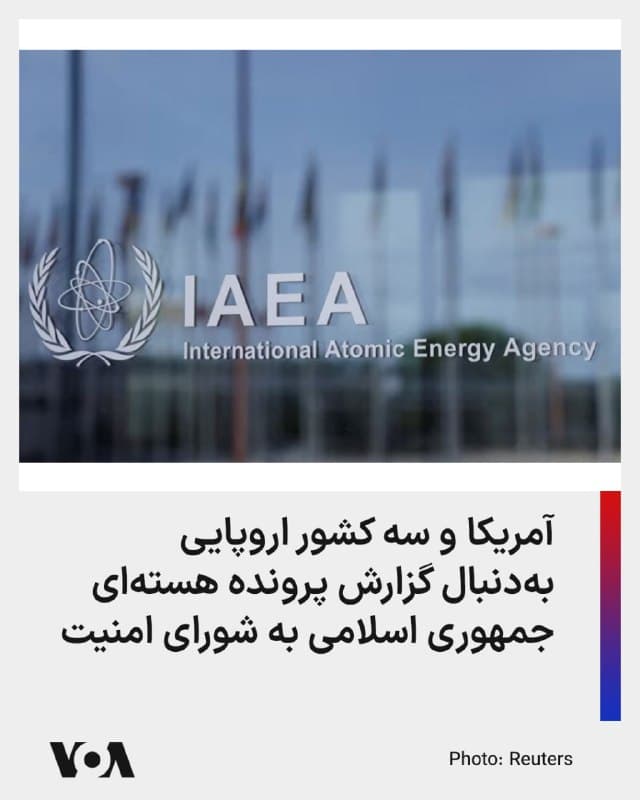
ایالات متحده آمریکا همراه با بریتانیا، فرانسه، و آلمان در تلاش است شورای حکام آژانس بینالمللی انرژی اتمی هفته آینده قطعنامهای تصویب کند که پرونده هستهای جمهوری اسلامی را برای نخستین بار در ۲۰ سال گذشته به شورای امنیت سازمان ملل متحد گزارش دهد. خبرگزاری رویترز روز جمعه ۱۳ شهریور به نقل از دیپلماتها و با استناد به متن پیشنهادی قطعنامه گزارش داد که چهار کشور در حال رایزنی با دیگر اعضای شورای حکام ۳۵ عضوی آژانس برای تصویب این قطعنامه هستند. مذاکرات درباره متن نهایی همچنان ادامه دارد و پیشنویس هنوز به طور رسمی به شورای حکام ارائه نشده است. بر اساس پیشنویسی که رویترز مشاهده کرده است، شورای حکام از مدیرکل آژانس خواهد خواست قطعنامه جدید و قطعنامههای پیشین مرتبط با برنامه هستهای جمهوری اسلامی را برای اعضای آژانس، شورای امنیت و مجمع عمومی سازمان ملل ارسال کند. در متن پیشنهادی همچنین بار دیگر از جمهوری اسلامی خواسته شده است موارد نقض توافق پادمانی خود را «فوراً» برطرف کند و اقداماتی را که آژانس و شورای حکام ضروری میدانند انجام دهد تا مدیرکل آژانس بتواند درباره صحت و کامل بودن اظهارنامههای هستهای حکومت ایران اطمینان لازم را ارائه کند. اقدام آمریکا، بریتانیا، فرانسه و آلمان ادامه قطعنامهای است که شورای حکام روز ۲۲ خرداد ۱۴۰۴ تصویب کرد. در آن قطعنامه جمهوری اسلامی به دلیل همکاری نکردن کامل با تحقیقات آژانس درباره آثار اورانیوم در مکانهای اعلامنشده، ناقض تعهدات خود در زمینه منع گسترش تسلیحات هستهای شناخته شد. یک روز پس از تصویب آن قطعنامه، در ۲۳ خرداد ۱۴۰۴، اسرائیل حملات به تأسیسات هستهای ایران را آغاز کرد و ایالات متحده آمریکا نیز پس از آن به عملیات پیوست. بر اساس گزارش رویترز، تأسیسات غنیسازی اورانیوم ایران در این حملات تخریب شدند یا بهشدت آسیب دیدند. جمهوری اسلامی از زمان این حملات به بازرسان آژانس اجازه نداده است به تأسیسات بمبارانشده بازگردند یا وضعیت باقیمانده ذخایر اورانیوم غنیشده را راستیآزمایی کنند. شورای حکام طی یک سال گذشته دو قطعنامه دیگر نیز تصویب کرده و از حکومت ایران خواسته است موجودی اورانیوم غنیشده خود را اعلام و دسترسی کامل بازرسان آژانس برای راستیآزمایی آن را فراهم کند. آژانس بینالمللی انرژی اتمی برآورد کرده است جمهوری اسلامی پیش از حملات به تأسیسات هستهای، ۴۴۰.۹ کیلوگرم اورانیوم غنیشده تا سطح ۶۰ درصد در اختیار داشت. بر اساس معیارهای آژانس، در صورت غنیسازی بیشتر، این مقدار میتواند برای تولید مواد شکافتپذیر مورد نیاز حدود ۱۰ سلاح هستهای کافی باشد. آژانس میزان غنیسازی ۶۰ درصدی جمهوری اسلامی را «مایه نگرانی جدی» دانسته است. جمهوری اسلامی میگوید قصد تولید سلاح هستهای ندارد و فعالیتهای هستهای خود را صلحآمیز میداند. ایران به عنوان عضو پیمان منع گسترش سلاحهای هستهای حق استفاده صلحآمیز از فناوری هستهای، از جمله غنیسازی اورانیوم، را دارد؛ اما آژانس میگوید جمهوری اسلامی تنها حکومتی است که بدون داشتن سلاح هستهای، اورانیوم را تا سطح ۶۰ درصد غنی کرده است. رویترز گزارش داده است در سالهای اخیر هر بار آمریکا، بریتانیا، فرانسه و آلمان پیشنویس قطعنامهای درباره برنامه هستهای جمهوری اسلامی به شورای حکام ارائه کردهاند، آن قطعنامه تصویب شده است. با این حال، اقدام عملی شورای امنیت علیه جمهوری اسلامی ممکن است با مانع روبهرو شود؛ روسیه و چین که از متحدان حکومت ایران به شمار میروند، از اعضای دائم شورای امنیت و دارای حق وتو هستند. @ VahidHeadline نمایندگی جمهوری اسلامی در سازمان ملل در وین اعلام کرد این اقدام آمریکا، بریتانیا، فرانسه و آلمان نشانه «شکست کامل توهم مکانیسم ماشه» است.این نمایندگی افزود این اقدام نیز «هیچ سودی» برای این کشورها نخواهد داشت. @ VahidOnLive 📡 @VahidOnline
English
The United States, along with Britain, France, and Germany, is seeking to have the International Atomic Energy Agency’s Board of Governors adopt a resolution next week that would report the Islamic Republic’s nuclear file to the United Nations Security Council for the first time in 20 years. Reuters reported on Friday, 13 Shahrivar, citing diplomats and a draft resolution, that the four countries are consulting with other members of the IAEA’s 35-member Board of Governors to secure its adoption. Negotiations over the final text are continuing, and the draft has not yet been formally submitted to the Board. According to a draft seen by Reuters, the Board of Governors would ask the IAEA director general to send the new resolution and previous resolutions related to the Islamic Republic’s nuclear program to IAEA member states, the Security Council, and the UN General Assembly. The proposed text also once again calls on the Islamic Republic to “immediately” address its violations of its safeguards agreement and take the steps the IAEA and its Board of Governors deem necessary, so that the director general can provide the necessary assurances about the correctness and completeness of Iran’s nuclear declarations. The move by the United States, Britain, France, and Germany follows a resolution adopted by the Board of Governors on 22 Khordad 1404. That resolution found the Islamic Republic in breach of its nonproliferation obligations because it had not fully cooperated with the IAEA’s investigation into traces of uranium found at undeclared sites. One day after the resolution was adopted, on 23 Khordad 1404, Israel began strikes on Iran’s nuclear facilities, and the United States later joined the operation. According to Reuters, Iran’s uranium enrichment facilities were destroyed or severely damaged in the attacks. Since the attacks, the Islamic Republic has not allowed IAEA inspectors to return to the bombed facilities or verify the status of its remaining stockpile of enriched uranium. Over the past year, the Board of Governors has adopted two other resolutions calling on Iran’s government to declare its stockpile of enriched uranium and grant inspectors full access to verify it. The International Atomic Energy Agency estimates that, before the strikes on its nuclear facilities, the Islamic Republic had 440.9 kilograms of uranium enriched to 60 percent. Under the IAEA’s criteria, if further enriched, this amount could provide enough fissile material for about 10 nuclear weapons. The agency has described the Islamic Republic’s 60-percent enrichment as “a matter of serious concern.” The Islamic Republic says it has no intention of producing nuclear weapons and considers its nuclear activities peaceful. As a member of the Treaty on the Non-Proliferation of Nuclear Weapons, Iran has the right to peaceful use of nuclear technology, including uranium enrichment; however, the IAEA says the Islamic Republic is the only government without nuclear weapons to have enriched uranium to 60 percent. Reuters has reported that in recent years, every time the United States, Britain, France, and Germany have submitted a draft resolution on the Islamic Republic’s nuclear program to the Board of Governors, it has been adopted. However, Security Council action against the Islamic Republic may face obstacles: Russia and China, considered allies of Iran’s government, are permanent members of the Security Council and hold veto power. @ VahidHeadline The Islamic Republic’s mission to the United Nations in Vienna said the move by the United States, Britain, France, and Germany was evidence of the “complete failure of the illusion of the snapback mechanism.” The mission added that this move would bring these countries “no benefit.” @ VahidOnLive 📡 @VahidOnline