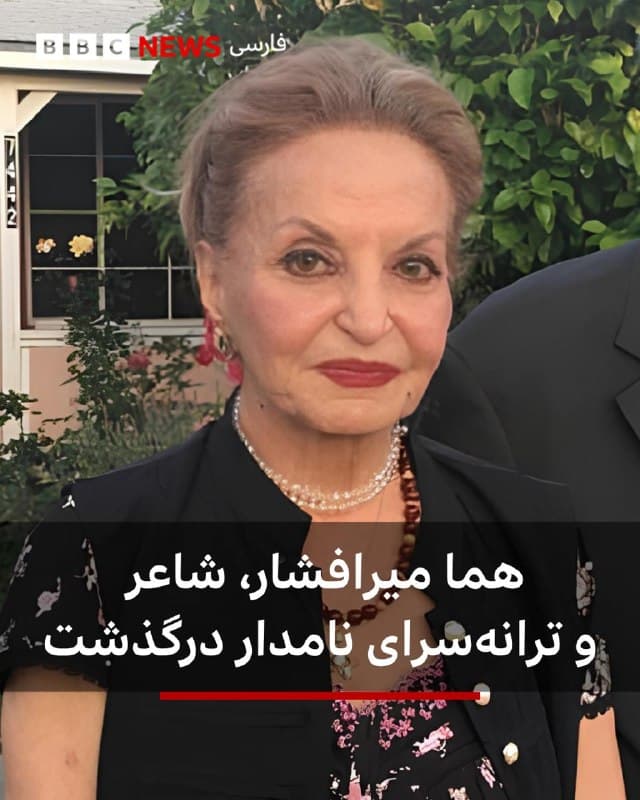
هما میرافشار، شاعر و ترانهسرای نامدار ایرانی، در ۸۹ سالگی در لسآنجلس درگذشت. مرتضی برجسته اشراقی، با نام هنری مرتضی، سهشنبه ۱۲ خرداد، در اینستاگرام نوشت که خانم افشار هفته گذشته چشم از جهان فروبست، اما خانوادهٔ او با تأخیر این خبر را منتشر کردند. این شاعر و ترانهسرا، که بر اساس گزارشها، سالها با بیماری آلزایمر دستوپنجه نرم میکرد، از پُرکارترین و محبوبترین ترانهسرایان قبل و بعد از انقلاب ۱۳۵۷ بود. هما افشار با بسیاری از خوانندگان برجسته ایرانی از جمله حمیرا، هایده، مهستی، ستار، ابی، داریوش، معین و عارف همکاری داشت. او در سال ۱۳۱۵ در تهران متولد شد و در جوانی با علی میرافشار، پسرعموی حمیرا، ازدواج کرد. این پیوند، دوستی نزدیکی بین هما و حمیرا ایجاد کرد که به گفته خود او، جرقهٔ تولید بسیاری از ترانهها و همکاریهای این دو با هم شد. @ VahidHeadline هما میرافشار، روزنامهنگار، شاعر و ترانهسرای تصنیفهای عاشقانه موسیقی دستگاهی و آثار به یادماندنی پاپ، در ۸۹ سالگی درگذشت؛ چهرههای نامدار موسیقی و علاقهمندانش در شبکههای اجتماعی از مقام هنری او تجلیل کردند. او در سه مجموعه شعری بیش از هزار سروده دارد که افزون بر ۲۵۰ شعرش در زمره ماندگارترین ترانههای ایرانی است و بیدلیل نیست که در جامعه موسیقی به «زن هزار ترانه» و یا «ملکه ترانهسرایی ایران» معروف شد. از همین روست که ایرج جنتی عطایی، ترانهسرای برجسته معاصر، هما میرافشار را پیشکسوت خود میداند که «پیش از ترانه نو و در کنار آن شهره بود.» هما پیشگام سرودن اشعاری بود که یک زن برای معشوق میخواند و یا حرفهای عاشقانه یک مرد برای دلبرش، چرا که تصنیفسرایان آن دوران به جنسیت ترانهها کمتر میپرداختند. او سالها پیش در برنامه «یک حرف و دو حرف» رادیو بیبیسی به زندهیاد محمود خوشنام، پژوهشگر موسیقی، در این باره گفت: «منیر طاها، سیمین بهبهانی یا لعبت والا که کار میکردند، من ندیدم که ترانههایشان بوی زنانه بدهد مگر این که از زبان مرد بیرون آمده باشد. اگر خواننده آنها مرد بوده به ناچار باید چیزی را مینوشتند که یک مرد به یک زن بگوید.» «یادم میآید که یکی از من پرسید که شما این حالت را چگونه مینویسید و من در پاسخ گفتم اگر بخواهم از زبان مرد شعر بگویم، مشتاق شنیدن همانهایی هستم که دوست دارم از او بشنوم. آن حرفها را میگذاردم در کلام و اکبر گلپا میخواند، یا میدادم به محمودی خوانساری می‎خواند اما گاه طوری مینوشتم که مرد یا زن هر کدام بخوانند فرقی نکند.» .... در ابتدای دهه پنجاه بود که اشعار هما میرافشار و ملودیهای زیبای محمد حیدری در صدر جدول بهترین ترانهها قرار گرفت و نام هما درخشید؛ مثل ترانه «دیوونتم» با اجرای حمیرا: «بذار بگم دیوونه‏تم...آره دیوونه‏تم من...نشکن منو به سنگ غم... چراغ خونهتم من...» یا ترانه «دلم میخواد» با اجرای هایده: «دلم می‏خواد که روزی صدهزار بار... بهت بگم دوست دارم عزیزم...» و یا ترانه «میکده» با صدای اکبر گلپایگانی: «هوس میکده داره دل دیوونه‏ی من، نمی‏دونه بی‏تو ایام بهارو چه کنه...» ... @ VahidHeadline 📡 @VahidOnline
English
Homa Mirafzar, the renowned Iranian poet and lyricist, passed away at the age of 89 in Los Angeles. Morteza Barjasteh Eshraghi, known artistically as Morteza, wrote on Instagram on Tuesday, June 2nd, that Ms. Afzar closed her eyes to the world last week, but her family delayed announcing this news. This poet and lyricist, who according to reports had been battling Alzheimer's disease for years, was one of the most prolific and beloved lyricists before and after the 1979 revolution. Homa Afzar collaborated with many prominent Iranian singers including Homayra, Hayedeh, Mahasti, Sattar, Ebi, Dariush, Moein, and Aref. She was born in 1936 in Tehran and in her youth married Ali Mirafzar, Homayra's cousin. This union created a close friendship between Homa and Homayra which, according to her own words, sparked the creation of many songs and collaborations between the two. @ VahidHeadline Homa Mirafzar, journalist, poet and lyricist of romantic classical music pieces and memorable pop works, passed away at age 89; prominent music figures and her admirers paid tribute to her artistic status on social media. She has over a thousand poems in three poetry collections, with more than 250 of her poems ranking among the most enduring Iranian songs, and it's no coincidence that in the music community she became known as the "woman of a thousand songs" or the "queen of Iranian lyric writing." This is why Iraj Janati Ataei, a prominent contemporary lyricist, considers Homa Mirafzar his predecessor who "was famous before and alongside modern songwriting." Homa was a pioneer in writing poems that a woman would sing to her beloved, or the romantic words of a man to his sweetheart, because classical composers of that era paid less attention to the gender of songs. Years ago, on BBC Radio's "One Word and Two Words" program, she told the late Mahmoud Khoshnam, a music researcher: "Monir Taha, Simin Behbahani, or Laabat Vala who worked - I never saw their songs have a feminine scent unless they came from a man's tongue. If their singer was a man, they inevitably had to write something that a man would say to a woman." "I remember someone asked me how I write in this manner, and I replied that if I want to write poetry from a man's perspective, I'm eager to hear the same things I'd like to hear from him. I would put those words into verse and Akbar Golpa would sing them, or I'd give them to Mahmoudi Khansari to sing, but sometimes I'd write in a way that it wouldn't matter whether a man or woman sang it." ... It was in the early 1950s that Homa Mirafzar's poems and Mohammad Heydari's beautiful melodies topped the charts of best songs and Homa's name shined; like the song "I'm Crazy About You" performed by Homayra: "Let me say I'm crazy about you... yes, I'm crazy about you... don't break me with the stone of sorrow... I'm the light of your home..." or the song "My Heart Wants" performed by Hayedeh: "My heart wants to tell you a hundred thousand times a day... that I love you, my dear..." or the song "Tavern" with Akbar Golpayegani's voice: "My crazy heart desires the tavern, it doesn't know what to do with spring days without you..." ... @ VahidHeadline 📡 @VahidOnline