English
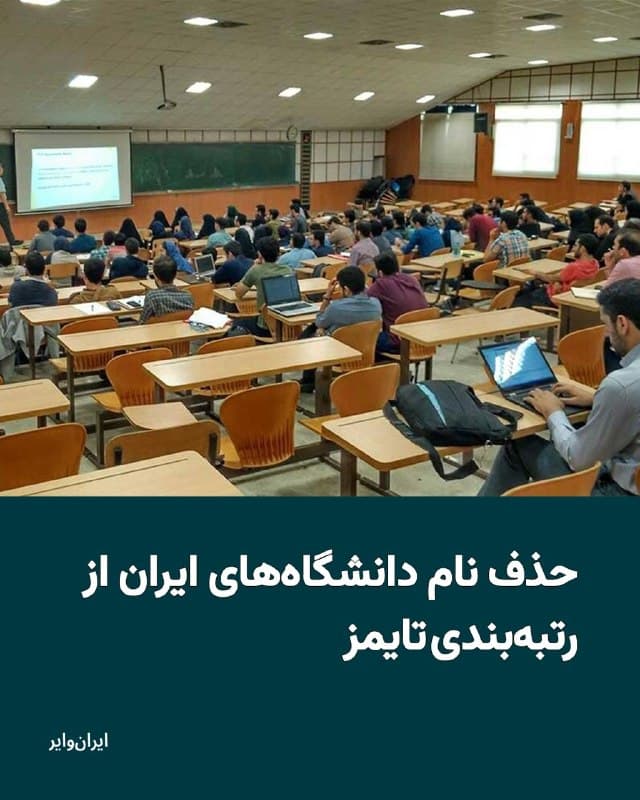
No Iranian universities appear in the 2026 Times Impact Rankings
No Iranian university is listed in the 2026 Times Higher Education Impact and Sustainability Rankings, despite 34 Iranian universities appearing in the 2025 edition. This year, Times changed how institutions can participate, making eligibility conditional on universities joining its sustainability network and submitting information themselves.
Some Iranian media outlets have described the change as “Iran’s removal”—a phrase that suggests a deliberate or punitive action. However, it is not yet clear whether the absence of Iranian universities resulted from a decision by Times or from their not participating in the new ranking process.
Times’ rankings are among the best-known and most widely consulted university assessment systems in the world. Their results can affect universities’ international standing, student recruitment and academic partnerships.
@VahidHeadline
For the first time since Times Higher Education began publishing its Impact Rankings, no Iranian university appears in the 2026 edition. The development, alongside the continued decline of Iranian universities in other major global rankings, has once again put the country’s higher education system under scrutiny.
According to the published results, the 2026 Times ranking assessed 1,646 universities across 116 countries against the United Nations Sustainable Development Goals (SDGs). Unlike in previous years, however, Iran is entirely absent from the list. The Times institution has so far offered no explanation.
Iran’s absence is notable because the country’s universities had appeared in the ranking every year since it was first published in 2019. In 2025 alone, 34 Iranian universities were assessed, and some ranked among the world’s top universities in several sustainable development areas, including “Good Health and Well-being,” “Quality Education,” “Industry, Innovation and Infrastructure,” and “Gender Equality.”
At the same time, the latest QS World University Rankings point to a continuing decline for Iranian universities. QS, one of the world’s most respected higher education assessment systems, evaluates universities using indicators such as academic reputation, research quality, citations, faculty-to-student ratios, international collaboration and graduate employability.
The University of Tehran fell 45 places, from 322nd to 367th in the world. The University of Tabriz dropped 108 places, Ferdowsi University of Mashhad about 125, and the universities of Shiraz, Isfahan and Islamic Azad also saw significant declines. Islamic Azad University fell out of the world’s top 1,400 universities.
By contrast, countries in the region have been moving in the opposite direction. Turkey has 25 universities in the QS rankings, with Istanbul Technical University reaching 279th place worldwide. The United Arab Emirates also has three universities among the world’s top 300.
Hosein Simaei-Sarraf, Iran’s minister of science, has attributed the decline in Iranian universities’ standing to reduced investment in research, weak international academic collaboration, a lack of educational and research infrastructure, and fewer opportunities for study and research abroad.
Shaheen Akhondzadeh, deputy for research at the Ministry of Health, had also said that widespread internet restrictions and disruptions in 2026 prevented Iranian researchers from conducting academic work for about a third of the year. He said this could lead to roughly 10,000 fewer academic papers and a further decline in Iran’s scientific standing.
Higher education experts also point to reduced links between Iranian universities and global academic institutions, restrictions on recruiting foreign faculty and students, lower research budgets, inadequate educational infrastructure and limited access to international academic resources as major factors undermining the competitiveness of Iranian universities in global rankings.
The Times Impact Rankings have been published since 2019 to assess universities’ progress toward the United Nations’ 17 Sustainable Development Goals. They are the only global university rankings to measure the role of universities in areas such as education, health, gender equality, innovation, the environment, justice and sustainable development.
@VahidHeadline 📡 @VahidOnline